
Neuro News

Neuro News
Week of 20 July 2026 | Neuroinclusion for workplaces and individuals
Happy Tuesday!
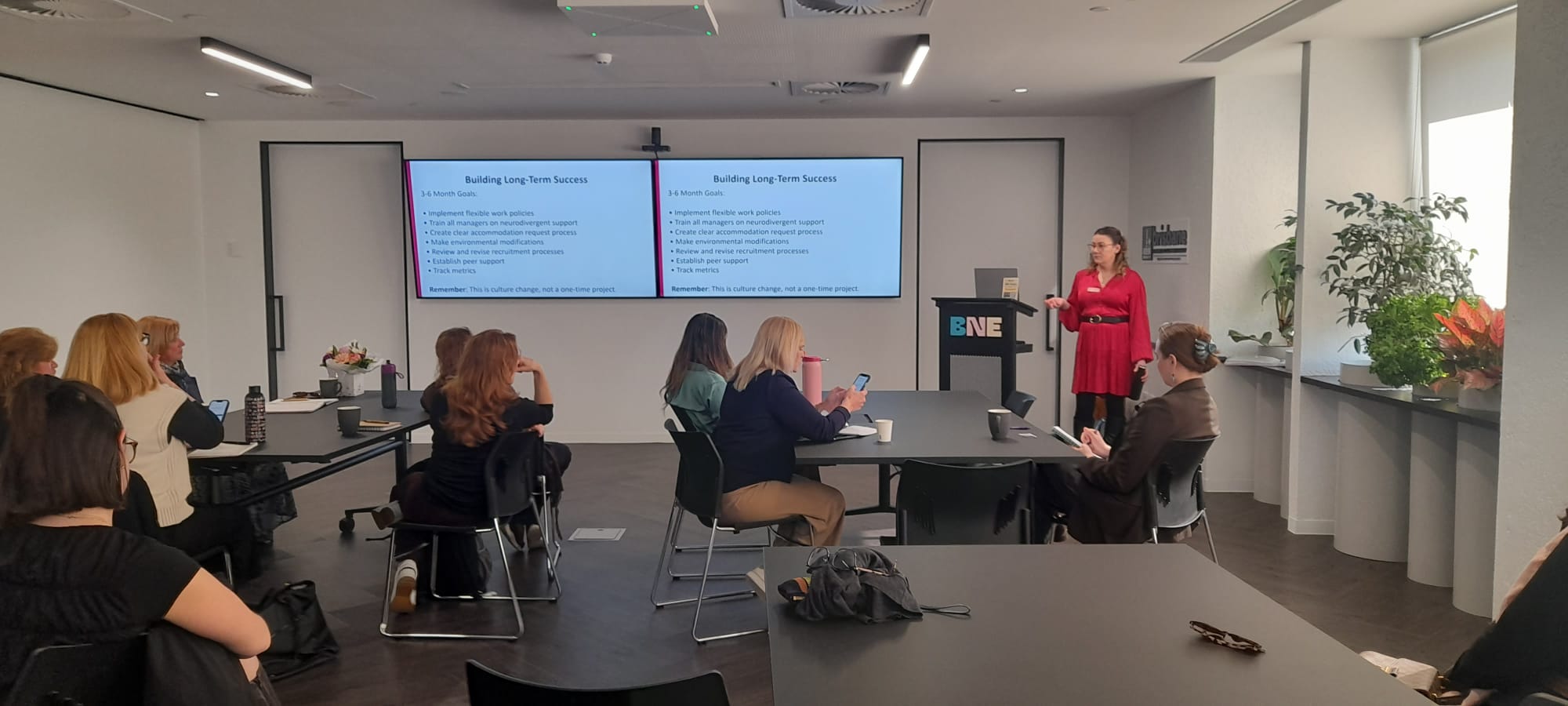
I had the fantastic opportunity to present at the Brisbane Business Hub on utilising neurodiversity in the workforce as a competitive advantage. In a rapidly evolving world of AI - how do you intend to get ahead and stay ahead? Automation creats opportunities and threats, being strategic here is how to leverage it. Curious to know more? Contact me by replying to this email or book in a time with me.
Cass
Founder | The Neurodivergence Voice
0419 423 746
Neurodivergence Voice | Empowering Inclusive Workplaces

Neuro at Work
Neurodiversity at Work: The progression ceiling
Most organisations have worked out how to hire neurodivergent talent. Far fewer have worked out how to promote it.
EY's Global Neuroinclusion at Work Study (2025) — reviewed by academics including Macquarie Business School's Associate Professor Anna Krzeminska — surveyed over 2,000 professionals and found that 91% of neurodivergent professionals face at least one barrier to career progression.
Only 25% feel truly included at work, and 39% intend to leave their job within 12 months. The City & Guilds Neurodiversity Index (2025) found 35% of respondents believe promotion opportunities are not equally accessible to neurodivergent employees.
The mechanism is straightforward: promotion processes typically reward informal networking, unstructured criteria and neurotypical communication styles — none of which measure capability in the actual role. The EY study calls the result a "line manager lottery": whether a neurodivergent employee progresses depends less on performance than on whether their manager happens to be an enabler or a blocker.
If you're in P&C, the audit question is simple. Look at your last ten promotions. What was actually assessed — the work, or the performance of confidence in a panel interview? Structured criteria, written promotion cases and manager training close most of the gap.
Neuro Hacks
The dopamine menu
Coined by Jessica McCabe (How to ADHD) and Eric Tivers in 2020, the dopamine menu solves a specific design flaw: the moment you most need a genuinely restorative break is the moment your executive function is least available to choose one.
So you default to scrolling, which stimulates without restoring.
The fix is to separate planning from choosing. Build the menu in advance, when your brain is working well:
Starters — five-minute boosts: step outside, one song loud, cold water on your face
Mains — longer activities that actually restore: a walk, a hobby session, exercise
Sides — things you pair with boring tasks: music, a podcast, body doubling
Desserts — high-stimulation, low-nourishment options (scrolling, games): still on the menu, used deliberately and sparingly
When you hit the low-dopamine wall, you don't decide — you order off the menu. The pre-decision is the mechanism.

Neuro and Cass
Waiting mode
A 2pm appointment. It's 9am, and you can't start anything. The day is already gone.
The neurodivergent community calls this "waiting mode": the inability to do anything productive in the lead-up to a scheduled event. It isn't procrastination and it isn't laziness. It's the combination of imprecise time perception (you can't feel how long 'until 2pm' is), high task-switching costs (getting absorbed and pulled out is expensive), and anticipatory anxiety — often built on a real history of hyperfocusing through alarms and missing things.
Staying in a holding pattern is the brain's protective logic: if you never start, you can't lose track.
Honest caveat: waiting mode isn't a clinical term and there's no formal research on it yet — but it's widely recognised, and the components (time perception differences, task-switching costs, ADHD–anxiety co-occurrence in an estimated 25–50% of adults with ADHD) are well documented.
What helps: cluster appointments into one day so they only cost you one day; set staged alarms (60, 30, 10 minutes) so the tracking job is outsourced and your brain can stand down; treat pre-appointment hours as bonus time for interruptible, low-stakes tasks rather than a slot you're obliged to fill with deep work.
Cheers,
Cass Nicholson | Founder | The Neurodivergence Voice
Brisbane QLD, Australia +61 0419 423 746


Comments